Welcome to the Museum of Engineering and Artificial Intelligence. Lead time and deployment frequency occupy the first cabinet. Keep walking: prompt chains, context-window bragging and tokens-per-second leaderboards have their own exhibits. Eventually, even today's LLMs are behind glass. Drawing on my book, A Brief History of Engineering… and What Comes Next, and my work with GitLab, this technical thought experiment follows the signals shaping AI: inference economics, generation architectures, reliable autonomy and models gaining tools that act. We examine cost and latency at a stated quality threshold, task completion, retries and human intervention. Autoregressive and diffusion language models provide a concrete example of how changing the machinery changes what we should measure. Then we extrapolate. What happens when agents coordinate at machine speed and action outruns verification? A worked scenario connects those questions to evaluations, tracing, orchestration, sandboxes and enforceable limits. The final exhibit imagines today's autoregressive LLMs outdone by “quantum diffusers”. This explicitly speculative future asks what must survive technological change, leading to Intentware: my proposed next-generation architecture for preserving purpose, constraints and accountability. Attendees leave with signals to watch and engineering questions to apply to their own AI systems.
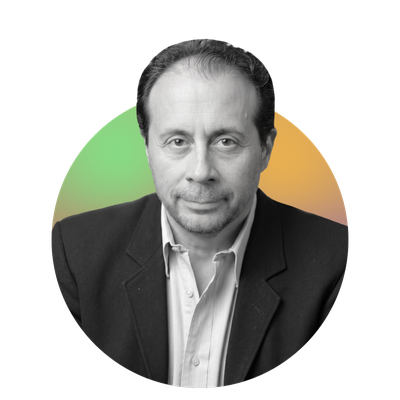
Neil Douek is a platform engineering practitioner, speaker and author of A Brief History of Engineering… and What Comes Next. His experience spans developer experience, DevSecOps and automation in financial services and global technology organisations, including LSEG and Fujitsu. He works with enterprise engineering teams through GitLab Professional Services and OTTRA. A Team Topologies Advocate and certified GitLab Solution Architect, Neil explores how AI changes the tools, measurements and responsibilities of software engineering.